Image

Months after Tropical Storm Chantal tore through North Carolina, Duke student Katelyn Cai found herself walking through a quiet Durham neighborhood where the damage still lingered. Floodwaters had receded, but their effects had not. Inside some homes, the first floors remained unlivable. Repairs stalled. Residents waited for help that had not arrived.
Cai wasn’t just there walking her dog or for a class assignment. She was reporting for The 9th Street Journal, a student newsroom housed at The DeWitt Wallace Center for Media & Democracy at Sanford. As she talked with residents, she began to realize there was a story no one else was telling.
“When someone asks me what I’m most proud of doing in the last four years, I answer: my story on the devastating impact of Tropical Storm Chantal on Durham’s Old Farm neighborhood,” Cai said.
That reporting experience sits at the heart of The 9th Street Journal’s mission. For five years, the publication has offered students something increasingly rare in American journalism: The chance to learn by doing local reporting that matters.
The 9th Street Journal began as a place to publish the strong journalism our students were producing. We quickly realized it was doing something more. It was providing coverage that Durham residents could not find anywhere else.
Bill Adair, Knight Professor of the Practice of Journalism and Public Policy, Founder of PolitiFact
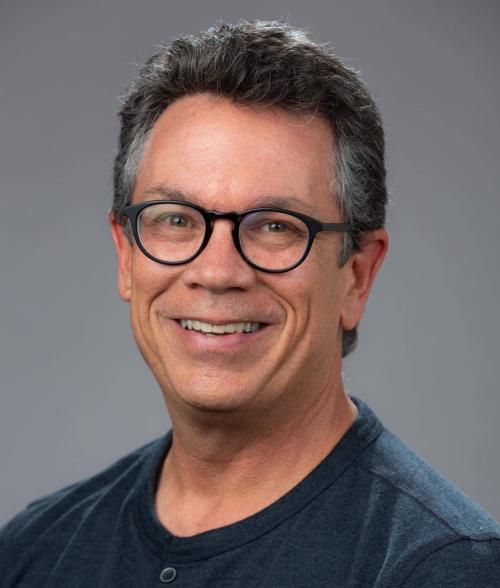
The 9th Street Journal began as a way to publish strong student journalism. Its founder, Bill Adair, a longtime journalist and Duke faculty member who also founded PolitiFact, quickly realized the project could do more than showcase student work.
“The 9th Street Journal began as a place to publish the strong journalism our students were producing,” Adair said. “We quickly realized it was doing something more. It was providing coverage that Durham residents could not find anywhere else.”
From the beginning, The 9th Street Journal focused outward. Rather than covering campus life, student reporters covered city council meetings, public schools, local elections, housing issues, and community life in Durham. Over time, the publication evolved into a functioning newsroom that complements, rather than competes with, local media.
The publication has become a key project of the DeWitt Wallace Center for Media and Democracy at Sanford. Adair is still the editor and Alison Jones, a longtime journalist, is managing editor, overseeing the day-to-day newsroom work.

“What I do now is very much like running a small newsroom,” Jones said. “I find story ideas and assign them to students. I edit the bulk of the stories. Bill and I work together on long-term planning and bigger projects, and he still does some hands-on editing as well.”
Students join the newsroom and work on real deadlines, with real sources, producing stories for a real audience.
For many students, the publication offers their first sustained engagement with the Durham community. That experience often reshapes how they see both journalism and the city itself.
“Because of my work for The 9th Street Journal, I finally feel like a Durhamite,” Cai said. “I’ve built long-lasting relationships with my sources, attended protests and parades, and developed a deep respect for this city’s history and culture.”
Jones hears similar reflections from students year after year.
“Many, many students have told us that they love how this lets them step outside the Duke bubble and really understand where they are,” she said. “They’ll say, ‘I learned so much about Durham from doing this.’”

A few years ago, that sentiment became literal.
A group of student reporters wrote “I love local government” on a whiteboard in the Reporters’ Lab, the publication’s newsroom space. Jones took a photo.
“They were so invested,” she said. The 9th Street Journal “gives them a chance to see local government in action up close and to learn by doing. The skills become very real and concrete for them.”
Students cover beats such as Durham Public Schools and city government, while also reporting feature stories about how the city works. Recent pieces have explored everything from storm recovery to how Durham handles discarded Christmas trees.
She discovered there was another story there. She came back to me, we talked it through, and I sent her back out. She did an amazing job and found a story no one else had told. That’s the ideal situation.
Alison Jones, 9th Street Managing Editor, Journals and Publications
Adair and Jones are particularly proud of their success identifying gaps in local coverage — and filling them. That approach earned statewide recognition in 2024, when 9th Street reporters won the North Carolina Open Government Coalition’s Frank Barrows Award for Excellence in Student Journalism.
The award recognized a series called Under the Radar, which examined Durham’s lesser-known boards and commissions.

“I’m especially proud of Under the Radar,” Adair said. “The idea was to send a student journalist to meetings that never get covered by local media.”
Student reporters attended meetings of the Alcoholic Beverage Control Board, the Historic Preservation Commission, and the city-county Appearance Commission.
“The result was a fascinating series that showed just how much work local government does outside the spotlight,” Adair said.
That same instinct guided Cai’s reporting after Tropical Storm Chantal. What began as an assignment to check on parks and waterways turned into a deeper investigation when sources mentioned a neighborhood still struggling months later.
“She discovered there was another story there,” Jones said. “She came back to me, we talked it through, and I sent her back out. She did an amazing job and found a story no one else had told. That’s the ideal situation.”
The Journal differs from other student publications in one important way. Professional journalists guide students through the reporting and editing process, offering detailed feedback and mentorship.
“I’m so grateful for Bill and Alison’s detailed editing for improving my writing, and for their trust in me to chase a story when I see one,” Cai said.

That trust grows over time. While newer reporters often work from assigned story ideas, more experienced students begin to pitch their own ideas as they develop a deeper understanding of Durham and its institutions.
“That’s an advanced skill,” Jones said. “You really have to understand the community to identify those stories. But when students get there, it’s exciting to see.”
The newsroom also encourages collaboration. Reporters often work alongside photographers and, more recently, videographers. Those partnerships mirror professional newsrooms and reflect the publication’s commitment to evolving with student interests and media formats.
I’ve come to believe that the best journalism is local journalism, and democracy cannot function without the press helping to create shared culture and knowledge in a community.
Katelyn Cai, 9th Street journalist, Class of 2026

For some students, The 9th Street Journal serves as a launching pad into professional journalism. Alumni have gone on to work at The New York Times, The Wall Street Journal, Time, NBC News, and other major outlets. Others have interned at organizations such as the Boston Globe and the Tampa Bay Times.
“We love that,” Jones said. “Students can be cautious about going into journalism now, and their parents can be too. It’s a tough field. But our students who really dig in tend to do well.”
Bill Adair remains a strong advocate for the profession.
“He is quite an apostle for the value of journalism and the excitement of that line of work,” Jones said.
Even for students who choose different career paths, the experience leaves a mark.
“Many alumni tell us later how valuable this experience was even though they took different paths,” Jones said. “It shapes how they think about storytelling, accountability, and public life.”
Cai sees that broader impact clearly.
“I’ve come to believe that the best journalism is local journalism, and democracy cannot function without the press helping to create shared culture and knowledge in a community.”