Image
Thank you for your interest in the Geneva Program. Program fees are listed below. Please note: Program fees do not cover room and board, airfare, visa fees and other living expenses. Each participant is responsible for those expenses. We encourage you to inquire with your home institution, program, employer, or sponsor for potential support early in the year.
Fee: $3,800
Duke Students: $2,420*
*Duke Sanford MIDP and MPP students pay a subsidized fee of $1,750.
Program | Description | Deadline |
|---|---|---|
One of the largest funders of graduate women’s education; awards $2,000–$50,000 for research, graduate study, and community projects. | Variable | |
Fellowships offered specifically for US graduate students to add significant international or language components to his or her academic study. | Late January | |
$5,000 scholarships for minority, women, and LGBTQIA+ students in environmental engineering/sciences. | Applications typically open in early spring and close by late spring or early summer | |
$2,500–$15,000 for U.S. citizens (18–25) doing self-arranged service projects abroad (≥6 months). | Mid-March, July and October | |
$500 stipend for students sharing their study/intern abroad experiences via blogs/social media. | Fall: Mid-Apr Spring: Mid-Oct | |
Up to $5,000 for Pell Grant recipients to study/intern abroad; extra $3,000 for critical languages. | Early March | |
$1M annually for academic excellence, leadership, and service; awards $500–$10,000. | Varies by scholarship | |
Official U.S. government portal for finding and applying for federal grants | Variable | |
Paid 3–6 month internships in labor standards and social justice; Geneva or global offices. | Apr & Oct annually | |
Database of scholarships, grants, and loans for international students and study abroad programs. | Variable | |
$500–$2,000 for graduate research on federalism and international integration. | Fall: Early April Spring: Early October | |
Provides global grants, scholarships, and fellowships promoting justice, education, and human rights. | Variable | |
Up to $30,000 for graduate study abroad in Rotary’s seven focus areas; club endorsement required. | Varies by district (often Nov–Feb) | |
Offers fellowships and research grants across multiple disciplines. | Variable | |
Paid internships in Geneva with a global health financing organization combating HIV/AIDS, TB, and malaria. | Varies by posting | |
Provides funding for MBA students pursuing nonprofit/public sector internships. | Variable | |
Supports environmental science students with summer internship funding. | Variable | |
Lists global health internships and funding opportunities for UNC students. | Variable |
*indicates school-specific grant
Planning to do an internship? Non-EU citizens must receive a work visa.
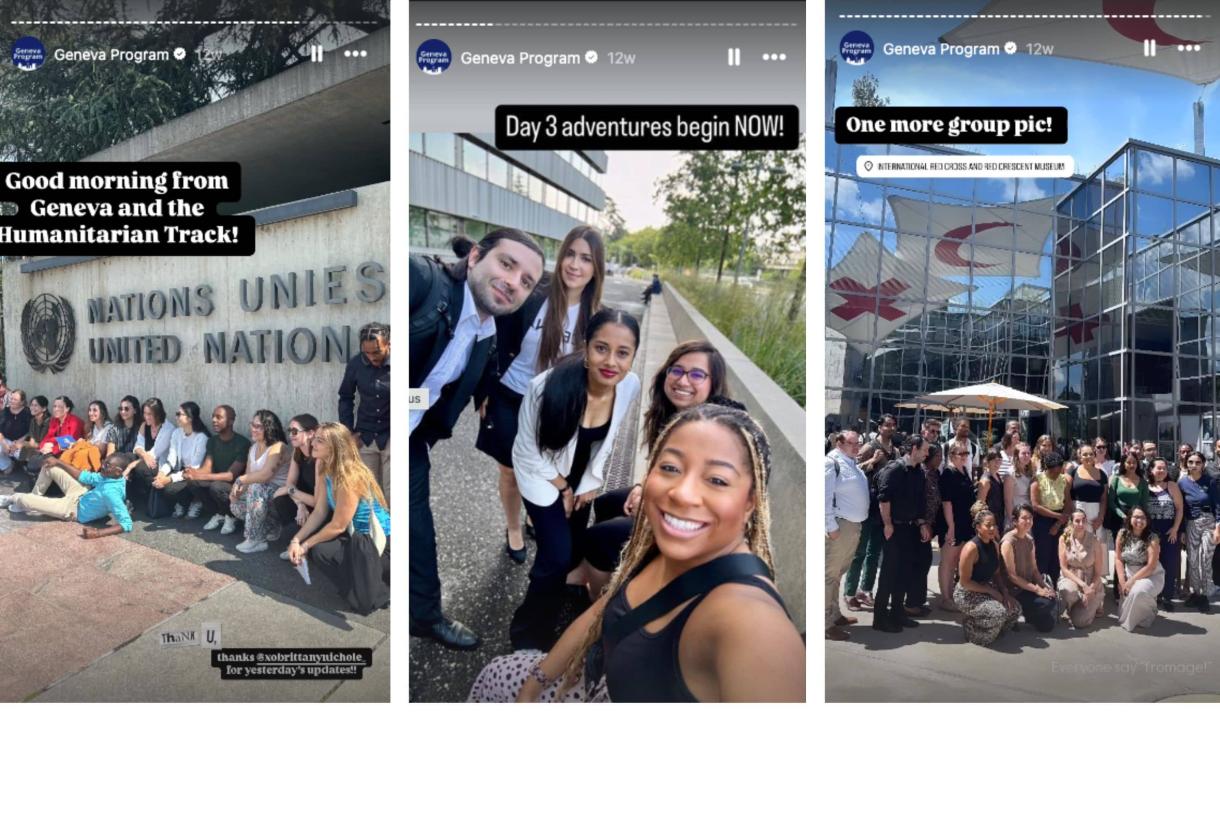
Follow along as two Geneva program participants do an Instagram takeover.